
In short: Anthropic has given Claude Enterprise one shared budget per team instead of a limit per person. I had Claude Code build an invented sales team of 15 with three months of spend and a November with a tender and a new seller, and replayed the month day by day. Split the money equally and the bid manager is stopped on deadline day. Anthropic's own starting point stops nobody, but leaves room for the month to cost more than twice what it actually does.
Then I gave Claude the export and the team's calendar and asked it to set the two numbers itself. Claude Sonnet 5.5 stopped nobody in any of its six runs, with a ceiling about half of Anthropic's. The smallest model, Haiku 5.5, set the member limit too low and stopped the bid manager in five of six. Further down this article there is an interactive demo where you can replay November under each budget and all 24 of Claude's proposals.
The reason is that on 28 October Anthropic made pooled group budgets generally available on Claude Enterprise. A group gets one shared amount a month, plus a member limit that is the same for everyone. Every request counts against both, and a person stops when the first one runs out. The next day came an API that exports spend per person per day. The question left for whoever has to give finance two numbers is the old one: what will Claude for business cost this team next month, and where should the ceiling sit?

The same money, split equally, stopped the bid manager
The invented software company Fjordlys has a commercial team of 15: the sales director, seven sellers, two SDRs, a bid manager, a RevOps analyst, marketing, content and customer success. In October they spent $1,974 on Claude. In November they bid on a public tender due Friday the 20th at noon, and a new seller starts on the 9th.
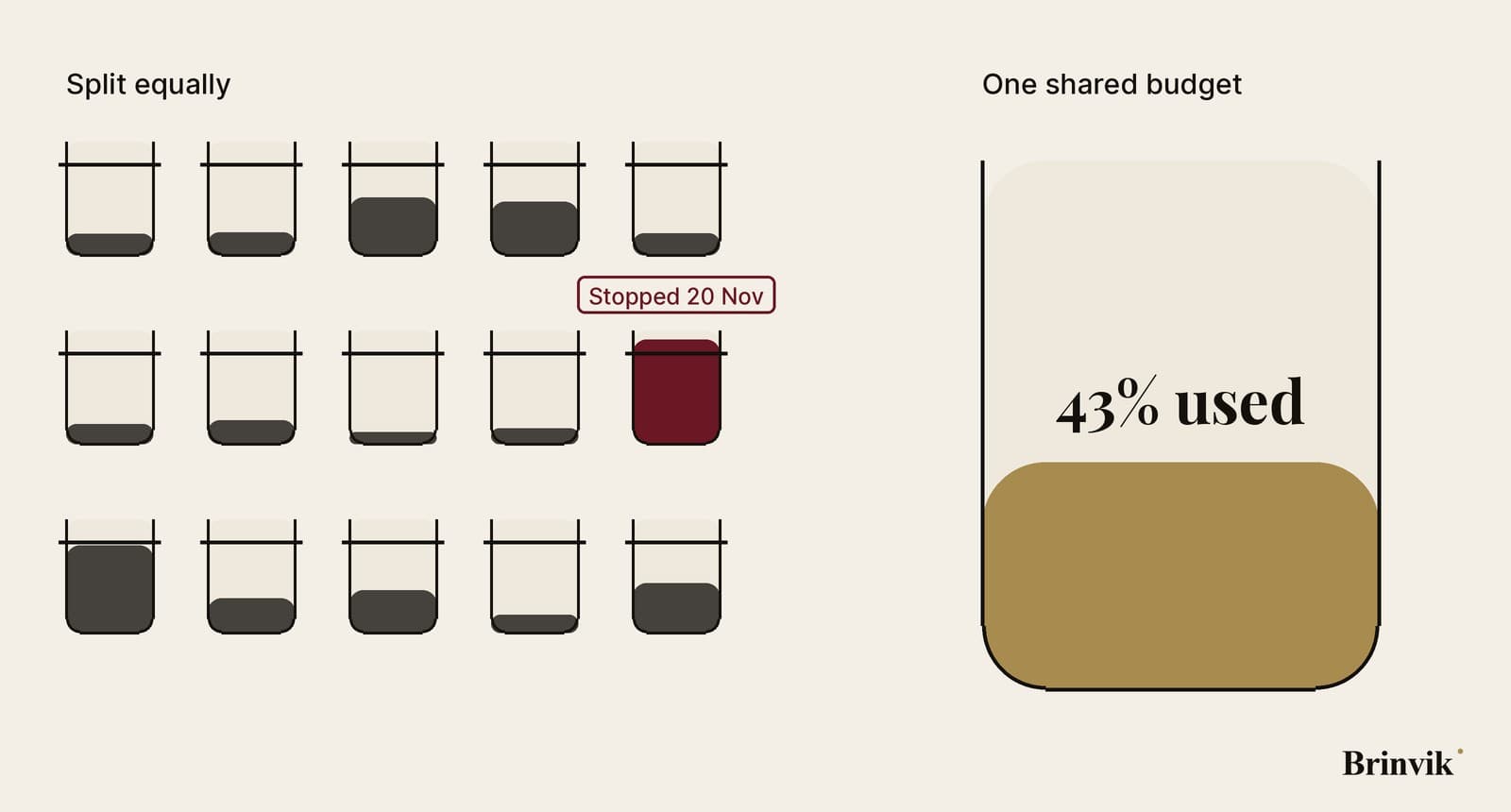
Anthropic's own help article warns against one setup in particular: handing out the shared amount equally as member limits, because then you are back to one-person limits. I tried it first. Anthropic's starting amount split 15 ways gives each person $395. The bid manager needed $454 in November, and he hit his limit on 20 November, the day the tender was due. The rest of the team had money left.

Anthropic's starting point stops nobody, but the ceiling is high
The help article suggests a starting point: a shared budget of about three times last month's spend and a member limit of about three times last month's top spender. For Fjordlys that is $5,922 and $1,225.
With those numbers nobody was stopped in November, and no alert email went out, because the month used only 43% of the amount. It is a safe setup for a first month. The price is a ceiling more than twice what the month actually cost, and the ceiling is the number finance asks about.

Claude set the budget from the calendar, but only the large model got it right
Then I gave Claude the team's export for August to October and the message a sales director would write: we move to a shared budget from 1 November, finance wants two numbers, and I would rather spend a little too much than stop someone in the middle of something important. The rules of a shared budget were in the message, Anthropic's rule of thumb was not. In half the runs Claude also got the calendar: the tender, the new seller and the RevOps month-end close.
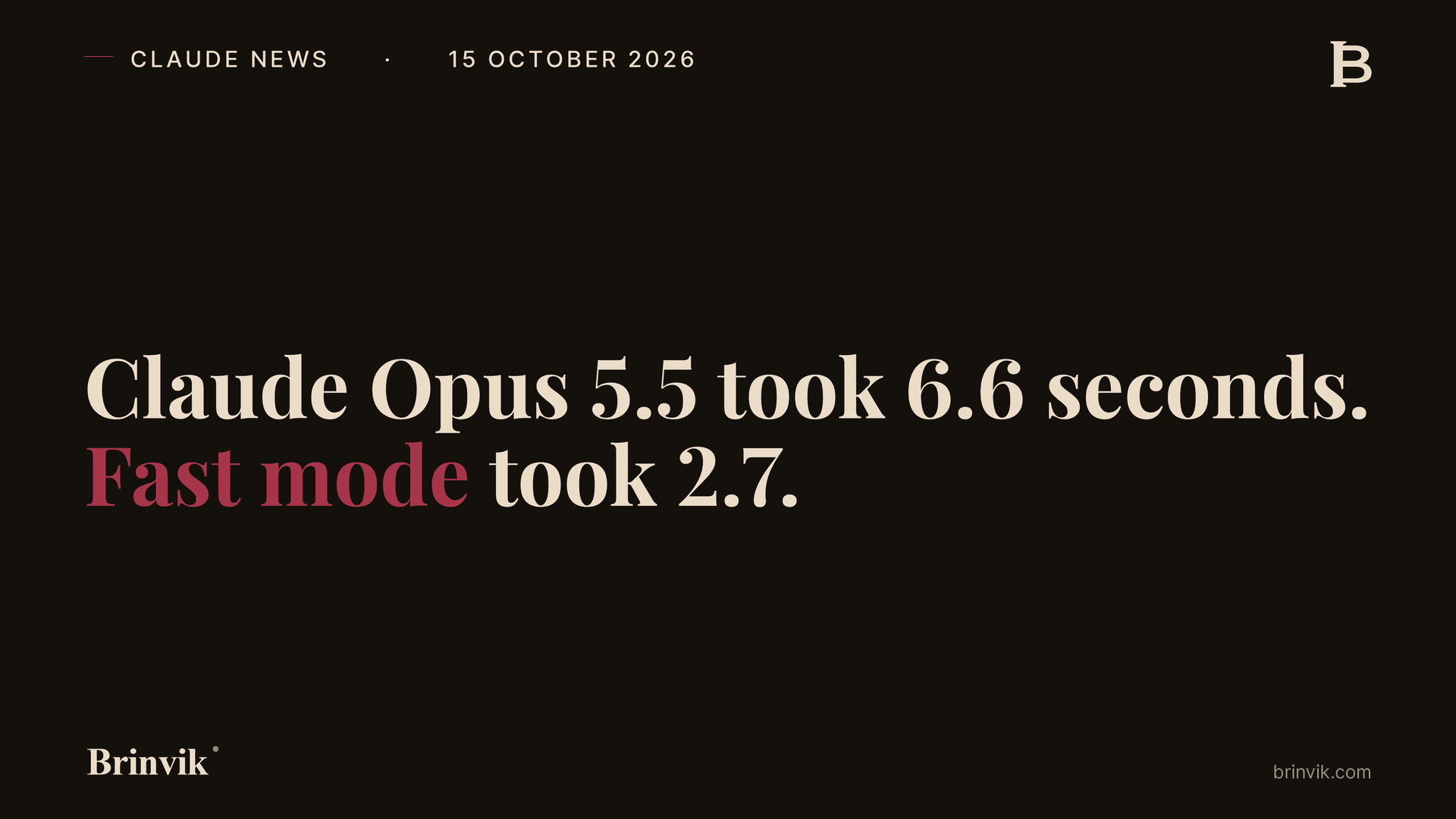
With the calendar, Claude Sonnet 5.5 proposed the same thing in five of six runs: a $3,000 shared budget and $600 per person. The reasoning was the same every time. It took September and October as the base, added the new seller and the tender, and put about 20% on top. It set the member limit from the RevOps analyst's busiest month. Nobody was stopped in any of the six runs, and the ceiling was about half of Anthropic's starting point.
Claude Haiku 5.5 got exactly the same message and mentioned the tender too. Even so, in five of six runs it set the member limit between $250 and $400, and in four of the runs it left the RevOps analyst out of its sums or was unsure whether she belonged to the group. The limit sat below what the bid manager needed in those two weeks, so he was stopped before the deadline in all five.
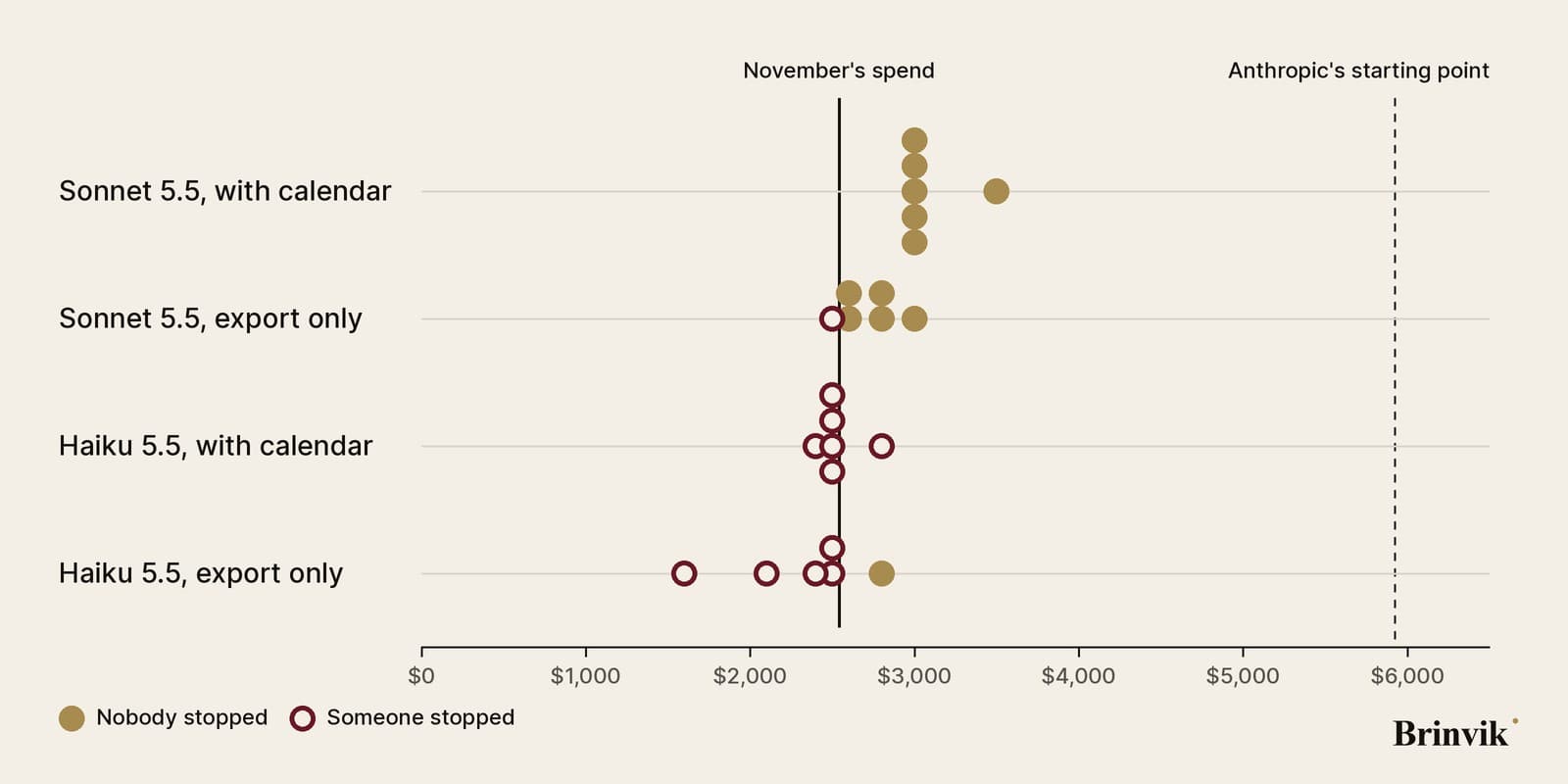
Without the calendar Sonnet did almost as well: nobody stopped in five of six runs, and in the last one the shared amount ran dry on 30 November. Haiku without the calendar let the shared amount run dry in five of six. So the calendar helped the large model land, and the small model did not use it for the member limit, which is where it mattered.

Can you trust the numbers?
The company, the people and the spend are invented, but built to look like a real export: one amount per person per day, holidays in August, busy days at month-end and no history for the new seller. The rules in the replay are Anthropic's own. Claude ran 24 times through a GitHub workflow, six times per model with and without the calendar, and every proposal is shown, the bad ones too. The whole test cost 2.21 dollars.
One thing makes the replay stricter than reality: in the product, a stopped person can press "Request more", and a quick admin would have rescued most of them. Here nobody presses it, so you see the worst case, the one that happens on a Friday morning when nobody answers.

Take the question home
What separated the good proposals from the bad ones was not the sum for the shared budget. It was the member limit, and whether it was set from the heaviest user in their busiest month. You can do that yourself before the month starts: pull the export, find that person and that month, and write down what is different next month. That is the part the export cannot see.
If you want Claude to propose the numbers, give it what Sonnet got and ask it to say what it counted in. Use the large model for it. This is the message to copy and fill in:
From the 1st of [month], our team ([number] people) gets one shared Claude budget with a member limit.
How it works: every request counts against both the person's limit and the shared amount, and a person stops when either runs out.
What happens in [month]: [tenders, campaigns, new people, holidays, month-end close].
Here is our spend per person per day for the last three months: [export].
Propose the shared amount and the member limit. Set the limit from the heaviest user in their busiest month, add what is different next month, and say what you counted in.

What does Claude for business cost a sales team?
What does Claude for business cost a team when usage is billed as it is used? It depends on what the team uses it for, and only your own export has that number. Anthropic does not publish an amount per person. The invented team here spent $2,542 in November, but that is a constructed figure, not a price.
What you can control is the ceiling. A shared budget caps the whole team, and the member limit protects against the one person who runs away with it. So the question of what next month will cost becomes two numbers you can explain: expected spend plus what is different, and the limit from the busiest user. Having Claude propose them cost 17 US cents per proposal with Sonnet and under a cent with Haiku.
As an AI consultant, I help teams set Claude up so the money follows the work: who goes in which group, which numbers the budget starts on, and what happens when someone presses "Request more" on a Friday. It is part of my AI advisory work, where Claude implementation is also about who may do what, and what it costs.
This test belongs to the same series as the previous one, where Claude checked a tender against its annexes. If you want to know what it would take in your team, write to me here.
FAQ
Frequently asked questions
One monthly amount a whole group draws from, with a member limit on top. Every request counts against both, and a person stops when the first one runs out.
Anthropic does not publish an amount per person for usage billing. The answer is in your own export. Use last month as the base and add what is different next month.
Because the heaviest user hits their limit first. In the test the bid manager was stopped on deadline day while the rest of the team had money left. Anthropic warns against it too.
Above what the busiest user spent in their busiest month, with room for what is different. In the test that decision separated the good proposals from the bad.
Yes, if you give it the export and the calendar. Sonnet 5.5 stopped nobody in six of six runs. Haiku 5.5 set the member limit too low in five of six, so use the large model.
They can press "Request more", and the request goes to an admin. The test shows the worst case, where nobody answers.
The company and the spend are invented. The rules are Anthropic's, and Claude's proposals are from 24 runs you can see in the demo.
Sources
- Smart reports, surveys, and pooled group budgets for Claude Enterprise, Claude, 28 October 2026
- Manage pooled group budgets on Enterprise plans, Claude Help Center, read 3 November 2026
- Usage and Cost Analytics API, Claude Platform, beta since 29 October 2026