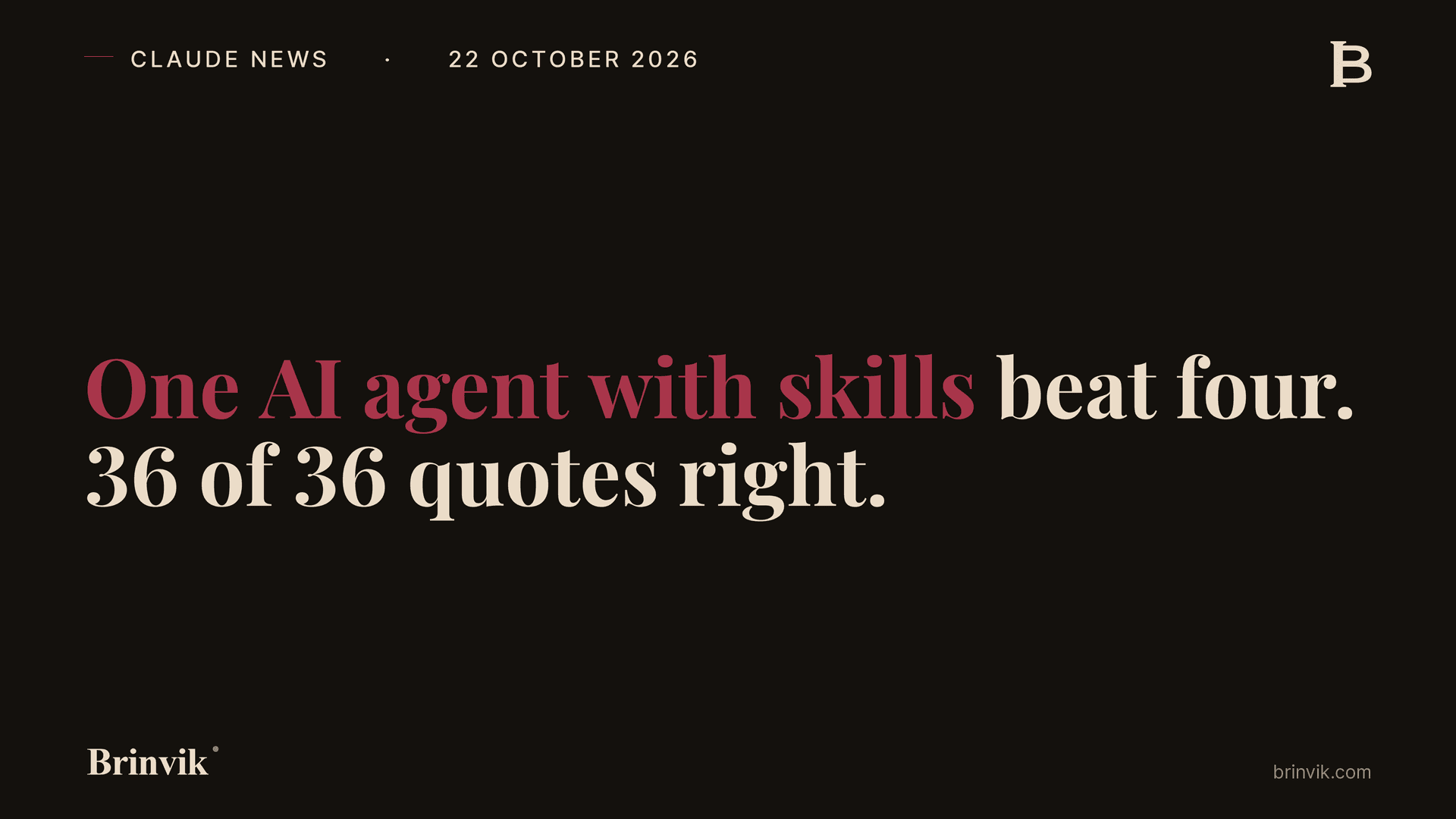

TL;DR: Anthropic launched Claude Fable 5.2 on 9 November, at twice the list price of Opus 5.5. I wanted to know if the expensive model is also the one that should answer your pipeline questions. So I gave Fable 5.2, Opus 5.5 and Sonnet 5.5 the same invented CRM and the eight questions a sales director asks on a Monday. That came to 96 runs in all. None of them fell into a single one of the traps that make a dashboard count wrong. Sonnet 5.5 was right 32 times out of 32 and more than seven times cheaper per right answer than Fable 5.2.
Fable, on the other hand, was the only one that said every time that one of the questions could be read two ways. Further down you can try the demo yourself: pick a question and watch the three models query the database and land on a number.
The occasion is Claude Fable 5.2, which Anthropic launched on 9 November. It costs $8 per million input tokens and $40 per million output, down from $10 and $50 for Fable 5.1, which makes it twice the price of Opus 5.5. Anthropic's own numbers show Fable 5.2 matching Opus 5.5 on hard coding tasks at about half the cost per task, and an Oracle quote on the launch page says Fable 5.2 wrote SQL with correct totals where two unnamed models' SQL overstated them five to eight times. Anthropic's own advice is to start with Opus 5.5 and move up or down as needed. That choice is what this test is about, when the task is your own sales numbers.

The traps in an ordinary CRM export
The invented software firm Saltholm Data has 150 deals in its CRM, plus 12 archived copies left over from merging duplicates. The deals are in four currencies, 9 of them have two CFOs on record because the old one was never removed, and 16 have been in proposal more than once. None of that is a mistake. Things like it build up easily in a CRM that has been in use for a while.
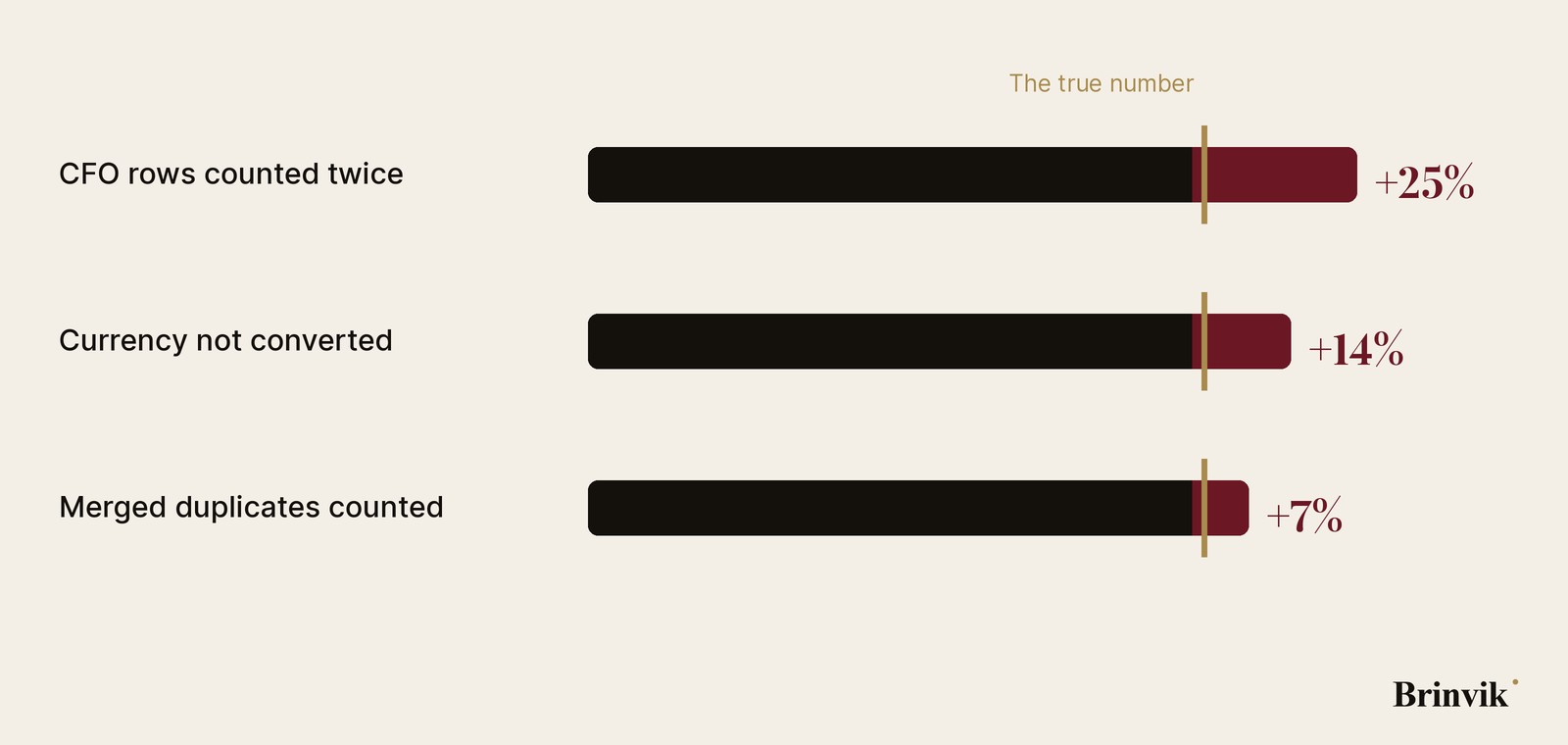
The danger is that each of them gives a number that looks reasonable. Add the deals up without converting currency and the open pipeline is 14 percent too big. Count the duplicates and it is 7 percent too big. Ask for deals where the CFO is involved and sum after a join on the contacts, and the deals with two CFOs count twice, so the total is 25 percent too big. That is the kind of error the Oracle quote is about, and the kind that can sit in a forecast unchecked.

All three models hit the true number
Each model got the database schema, a tool to run SQL and the sales director's question. It could query as often as it liked, and had to hand in one number at the end. All three left out the archived duplicates in every one of the 96 runs, and converted currency in every run that asked for kroner. On the CFO question, all three counted each deal once.
Then I took the documentation away. In half the runs the model got only the column names, the way a raw export arrives, without a line about what archive means or that amounts are in the deal's own currency. Opus and Sonnet answered the same with and without it, and Fable got one more right without it, so the documentation made no difference you could measure here. The number of queries went up a little. The models found the traps by looking at the data instead of reading about them, and none of them added up a single wrong total.

The dearest model read one question another way
Fable 5.2 missed my answer key 3 times, all three on the same question: what is the value of the deals that went into proposal in October? Opus and Sonnet counted every deal that entered proposal in October and got DKK 3,563,279. Fable counted only the deals that entered proposal for the first time in October and got DKK 2,797,423, 21 percent less.
The arithmetic was fine. The question could be read two ways, Fable took the other one, and it said so in its own note every time: counting the other deals too, it wrote, the figure is DKK 3,563,279 across 22 deals. So it gave both numbers and handed in the narrow one.
Fable was also the only model that pointed out every time that the question could be read two ways. Sonnet never mentioned it, and Opus mentioned it once in four runs. Sonnet got full marks because its reading was the one my answer key used. Read only the number, and you get the answer to a different question from the one you asked.

Claude for business: what does a right answer cost?
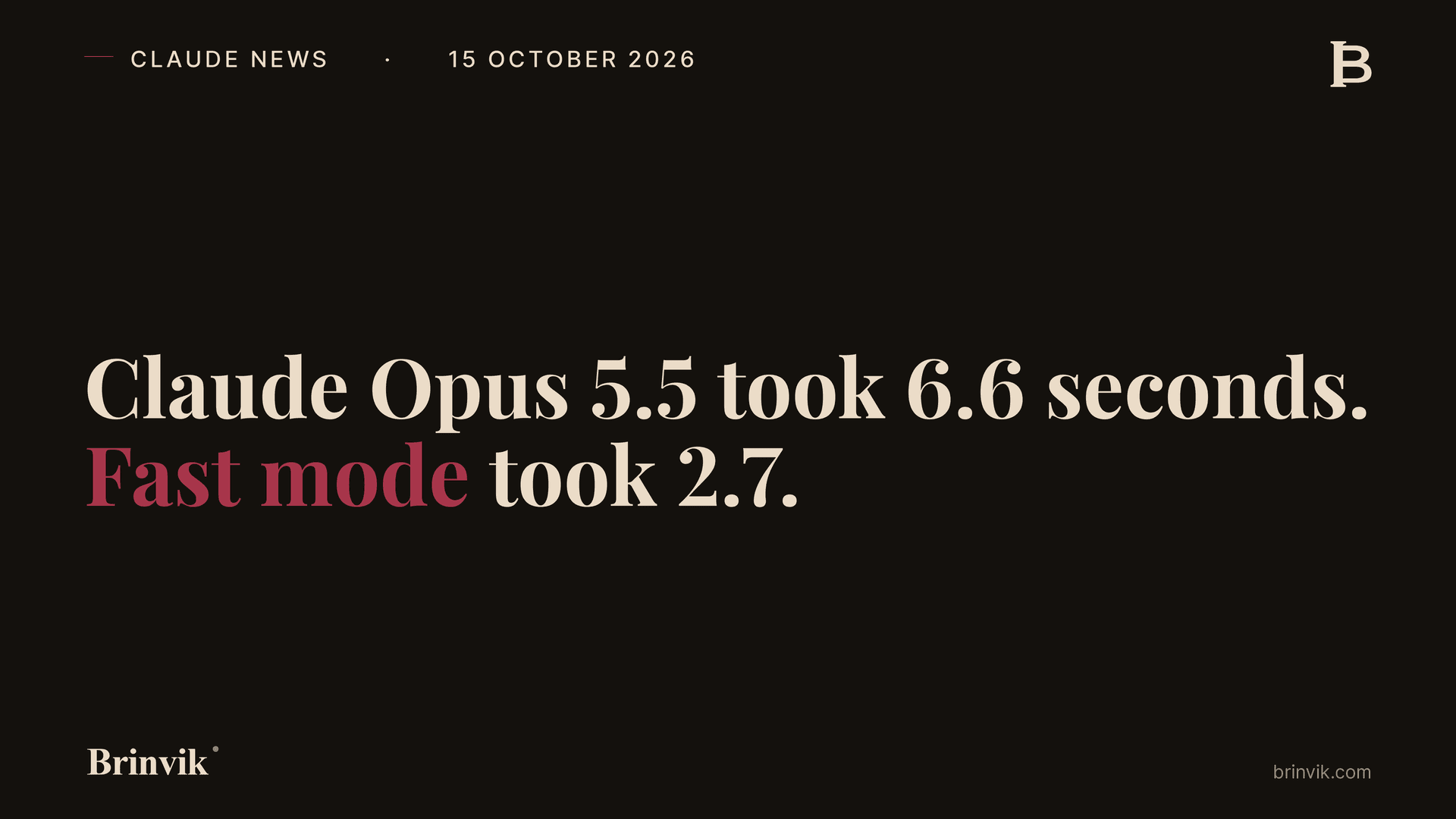
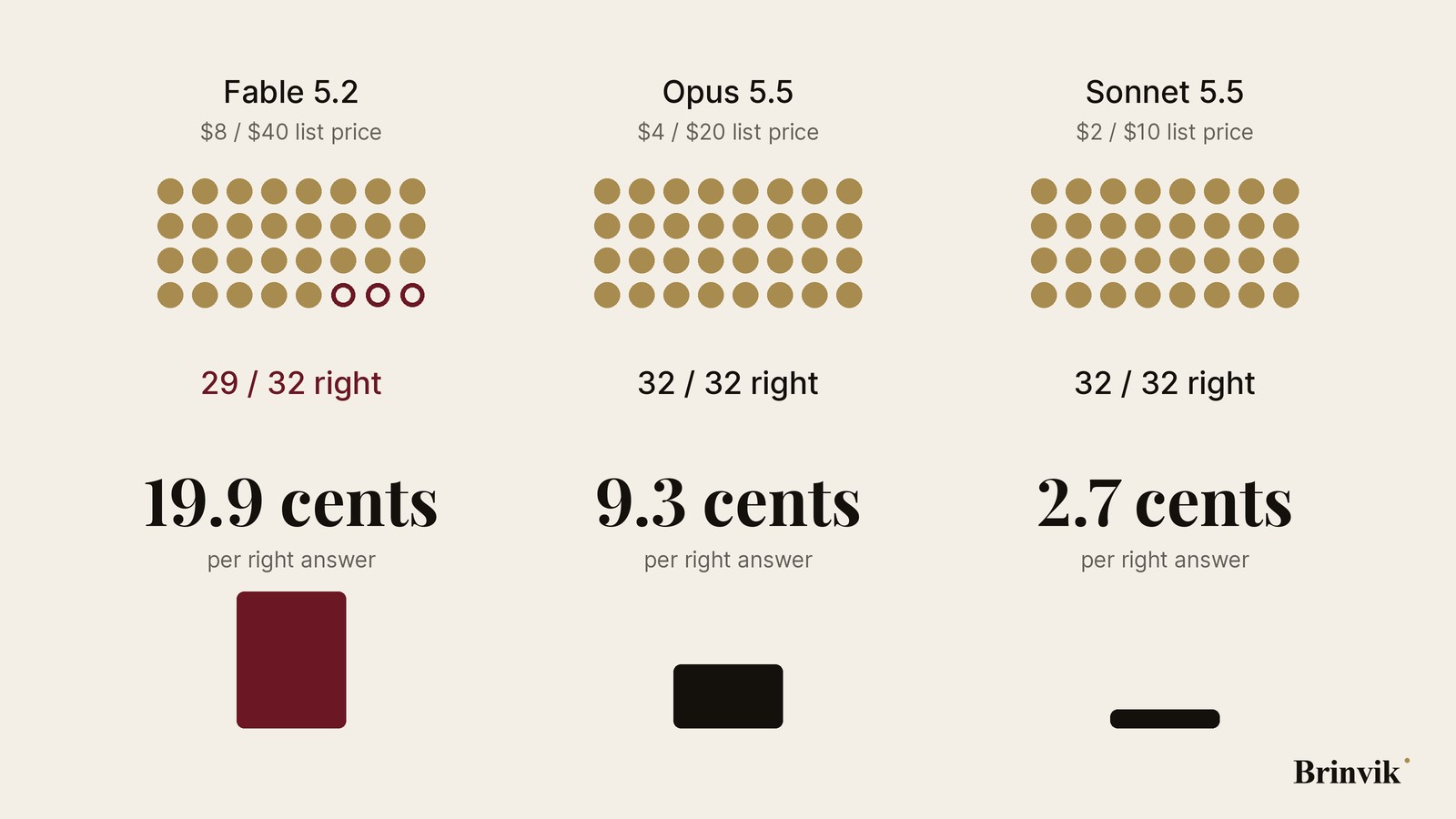
Price is the other place the models parted ways. I multiplied each run's tokens by the list price. A right answer cost 2.7 cents from Sonnet 5.5, 9.3 cents from Opus 5.5 and 19.9 cents from Fable 5.2. Fable also took the longest: 21 seconds per answer on average against 7 for Sonnet.
So what does Claude for business cost a sales team that asks this kind of question every week? Mostly, it depends on which model you send the question to. The price per million tokens is the number Anthropic publishes, but the number that matters to you is the price per right answer. Here the cheapest model was as accurate as Opus, and the fastest. Fable 5.2 is built for hard, long tasks, and Anthropic's own measurements show it is strongest there. A SQL query on a CRM with 150 deals is not one of them.

Can you trust the numbers?
The company and the deals are invented, but built like a real export, with the traps a real export has. The true answer to each question is computed twice, once in SQL and once in plain code, and the two must agree to the krone. Each model answered every question four times, twice with documentation and twice without, at the same setting. An answer counts as right when it is within half a percent of the true number. The whole test cost $9.58.
The test cannot show everything. It covers eight questions on one dataset, not every question you could ask. The column names helped the models even without documentation: a field called archived is hard to miss. And question 5 could be read two ways, which is a flaw in my question as much as in Fable's answer. That flaw is exactly the point of the last section.
Pick a question in the demo above, and try "Went to proposal" with and without documentation to see the two readings side by side.

How to ask the question of your own pipeline
A right answer depended on whether the question could be read only one way. When you let an AI agent answer on sales numbers, you can use the moves this test points to:
-
Say which moment counts. "Deals that entered proposal in October, including those that had been there before", not "deals that went into proposal in October".
-
Say which currency and which deals. Kroner, converted at today's rate, archived duplicates left out.
-
Ask for the reading before the number. "First write how you understood the question, and if it can be read more than one way, give the number for each." That is exactly what Fable did in its note. Make it part of the answer instead of a remark.
-
Start with the cheap model. Test on your own data with Sonnet first. That advice rests on this one test, not on Anthropic's, which is to start with Opus. Only move up if the answers do not hold.
As an AI consultant I help sales and RevOps teams with AI for revenue operations: I set Claude up against your CRM so the questions are asked in a way that can only be read one way, and I test the answers against your own numbers before anyone uses them in a forecast. That kind of check belongs in any Claude implementation. Read more about AI advisory, or see how one shared Claude budget holds up in a sales team.
FAQ
Frequently asked questions
Anthropic's new model from 9 November 2026, built for demanding reasoning and long tasks. It costs $8 per million input tokens and $40 per million output.
In the test a right answer cost 2.7 cents with Sonnet 5.5, 9.3 cents with Opus 5.5 and 19.9 cents with Fable 5.2, at list price and the tokens each run actually used.
Start with the cheapest one that answers right on your own data. In the test Sonnet 5.5 was right every time. Keep the dear models for tasks where the cheap ones fail.
In the test, yes. All three models found the currencies, the duplicates and the doubled contacts by looking at the data, even without documentation.
It read one question as the first time in proposal instead of any time in proposal. It wrote the right number in its own note, and it was the only model that named both readings every time.
Send routine questions to a cheap model, measure the price per right answer instead of per token, and write the questions so they can only be read one way.
Sources
- Introducing Claude Fable 5.2 and Claude Mythos 5.2, Anthropic, 9 November 2026
- Claude Platform release notes, 9 November 2026
- Pricing, Claude Platform, read 9 November 2026